If you haven’t finished The Heiress Blacklisted Her Husband yet, bail now and come back later. I’m about to talk about the BIG reveals and the final fallout.
This series is basically built on one idea: Giselle married Patrick when she had nothing… and then everyone treated her like she was nothing.
Meanwhile, she’s secretly the Duke’s daughter / the Von Howard heiress, and she’s the reason Patrick’s whole “success story” even happened.
So the ending isn’t just “do they kiss or don’t they.” The real question is: does Patrick actually understand what he did, and does Giselle get her power back in a way that feels satisfying?
Where the ending really starts
By the time you hit the final stretch, Giselle is already worn down from the same two villains on loop: Patrick’s mom (who treats her like a disposable “poor wife”) and Becky (who keeps pushing the “other woman” angle). Giselle is pregnant, exhausted, and constantly forced to defend herself in a house that never feels like hers.
And Patrick? He’s not twirling a moustache, but he does that super frustrating thing where he thinks staying “neutral” means he’s being fair. In reality, it means he’s letting loud, cruel people run his marriage for him.
That’s why the title hits: “blacklisted” isn’t just drama wording. It’s the emotional move Giselle makes when she stops begging to be chosen. She chooses herself.

The ending, step-by-step (what happens)
1) Giselle leaves — and the story finally flips
The ending arc kicks into gear when Giselle separates from Patrick and steps back into her real identity and status — the “castle / inheritance” side. A lot of the clips and reposts literally frame it that way: after divorcing, she returns to the castle to inherit what’s hers.
This is the part I like most, honestly. Because it’s not “she got rich.” She was always powerful — she just wasn’t allowed to use it.
2) Patrick realizes way too late that he got played
Patrick’s “oh no” moment is basically him replaying the last chunk of his marriage in his head and noticing a pattern: Becky appears → chaos happens → Giselle gets blamed → Patrick hesitates → Giselle gets hurt.
By the end, it’s obvious Becky wasn’t background noise — she was the spark behind most of the chaos.
In other words: the ending isn’t “Patrick vs Giselle.” It’s “Patrick vs the mess he allowed into his life.”
3) The pregnancy pain becomes the point of no return
This series goes hard on pregnancy heartbreak (it’s one of the emotional engines of the whole thing). The baby storyline is the emotional point-of-no-return. After that, ‘sorry’ stops working.
That matters because once you cross that line, “sorry” doesn’t fix it. Not instantly. Not with one bouquet. Not with one dramatic speech in the rain.
4) The public “castle” confrontation / party energy
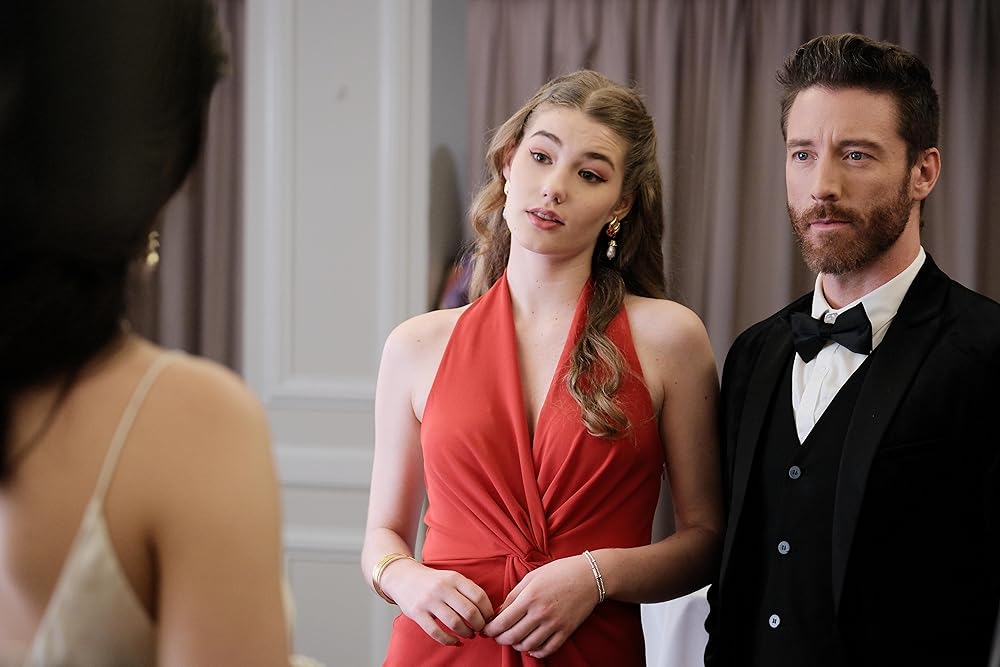
The ending is heavily associated online with the “castle” setting and the social power flip — even reposted video titles lean into it: the ex-husband and mistress show up at her castle, and suddenly Giselle isn’t cornered anymore.
This is where the show does what it does best: humiliating the people who were way too comfortable humiliating her. It’s petty. It’s satisfying. It’s the whole genre.
5) The kneel / apology moment (aka the headline scene)
If you’ve seen any viral reposting around this series, you’ve probably seen some version of: the divorced husband kneels and begs forgiveness after learning who she really is.
And that’s the emotional “capstone” beat: Patrick finally understands he wasn’t protecting his wife — he was protecting his comfort. Meanwhile, Giselle has already done the hard part: leaving.
6) So… do they end up together?
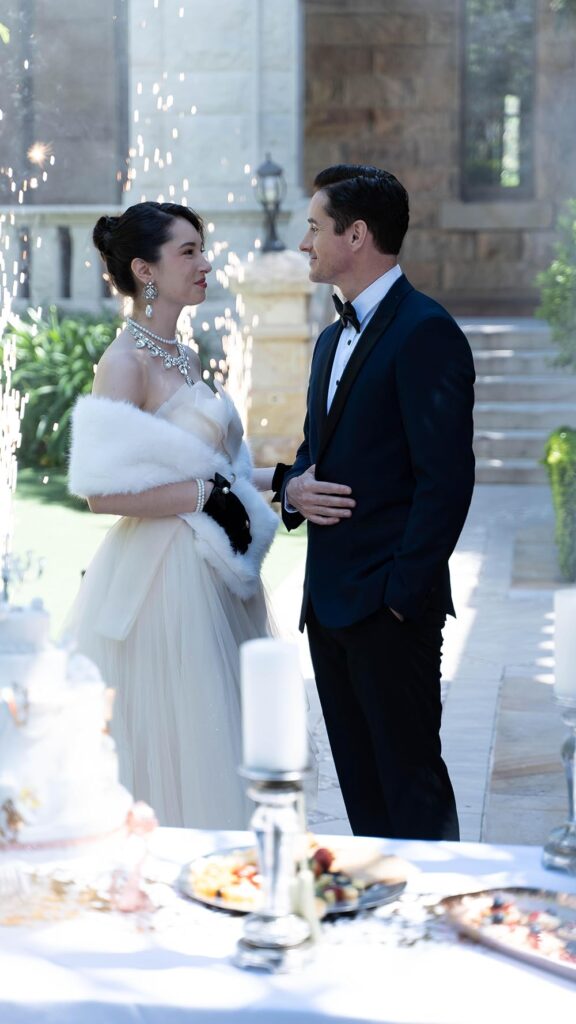
The ending plays like a reconciliation / second-chance finish — but only after Giselle draws real boundaries.
But the more important win is that the relationship (if it continues) can’t continue on the old terms. The ending is basically Giselle saying: “You don’t get the old me back.”
What the ending is saying
The ending is doing three big things:
- It flips the power. Giselle goes from being “explained over” to being listened to.
- It exposes the real damage. Not just cheating rumors — but long-term disrespect and emotional neglect.
- It makes consequences feel real. The baby loss + public humiliation arc is the show saying: this wasn’t harmless.
And weirdly… it changes how the earlier episodes feel on a rewatch. Because once you know who Giselle is, every early insult lands differently. It stops being “mean rich people” and becomes “people abusing someone they think can’t hit back.”
Also: the “regal” shift is something viewers notice immediately. Even in comment sections on reposts, people point out how the actress plays “poor, helpless wife” versus “Duke’s daughter” like two totally different energies.
What people online keep saying about it
The funniest part about this series is that a lot of viewers are fully aware it’s melodrama… and they still binge it like it’s snacks. One review vibe that pops up is basically: “this is ridiculous… I couldn’t stop watching.”
People also nitpick the acting in a very specific way (and I mean this lovingly): there are comments about the accents changing, and even jokes that Patrick didn’t smolder enough.
But even the critics tend to agree on the core appeal: the ending delivers the fantasy — the woman who got treated like dirt becomes the one everyone has to face… on her turf.
My take: why it works… and what I’d fix
What I genuinely like about the ending is that it doesn’t pretend love fixes disrespect. The “kneel and beg” moment isn’t romantic by itself — it’s only satisfying because it comes after Giselle finally chooses herself.
And the castle/inheritance framing is perfect genre symbolism. Because it’s not really about money. It’s about belonging. Giselle stops trying to earn a place in the Hilton house and returns to the place where no one can vote her out.
What I’d fix (if the writers asked me nicely and brought snacks):
- I’d make Patrick do more actual repair. Apologies are cute; changed behavior is cuter.
- I’d let Giselle stay angry longer. She earns that anger.
- I’d tighten the “misunderstanding” loops early on — the ending is strong enough that it didn’t need quite that many repeats.
Still… if you like this genre, the ending does the job: it gives you justice, the big identity flex, the public humiliation payoff, and a romance landing that feels like it could actually restart on new terms.
Quick FAQ
Giselle walks away, reclaims her identity and status, the lies collapse, and Patrick ends up chasing forgiveness instead of taking her for granted.
Yes — that’s the main payoff. The story is built around her being underestimated while she’s actually the Von Howard heiress.
By the end stretch, the show leans into that identity shift hard.
Both, but it lands as a romance-with-consequences. The official setup is: she divorces him, and he starts the long win-her-back journey. So you get payoff moments, but the relationship doesn’t magically go back to normal in one scene.
The series is very “betrayal-coded” (even ReelShort’s own video titles call him a “cheating husband”),
but it also pushes the idea that Becky is constantly engineering situations and misunderstandings.
Either way, Giselle experiences it as betrayal, and that’s what breaks the marriage.
Becky is positioned from the start as the person fueling the humiliation and confusion around Giselle. The show’s hook is basically watching that manipulation stop working once Giselle leaves.
The pregnancy arc is one of the big emotional engines of the show.
There’s an episode cliffhanger where Giselle leaves bleeding and the episode literally teases, “Did she lose her baby?” (So the story wants you stressed, yes.)
It’s the visual shorthand for the power flip. There are official ReelShort clips framed around
“returning to the castle to inherit” and the ex showing up at her castle event, which is basically the genre’s favorite kind of payoff.
ReelShort’s “Full Episodes” page says 85 episodes total, while IMDb lists an 86-episode guide.
(So if you see people arguing online, that’s why.)
Don’t hold your breath. A ReelShort fandom write-up says it’s a one-season story and “that is as far as it goes.”
ReelShort has called out different standouts on different pages (it’s not consistent), including Episode 4 + 85, and elsewhere 36 + 62.